

Building a Global Criminal Justice System at the Domestic Level
While the project’s focus is on international criminal law (ICL), international refugee law (IRL) is the starting point; it is the metaphorical canary in the coal mine that flags up questions at the heart of ICL. Many of the domestic prosecutions of international crimes are asylum and migration related and call for a joined up and coordinated system of justice where there is a clear focus on who should be prosecuted. To date, no such system exists.
This comes with problems. First, article 1F(a) of the Refugee Convention, the so-called exclusion clause, stipulates that those who are suspected of having committed international crimes are undeserving of protection and should be prosecuted. But there is no uniform understanding of ‘undeserving’. At the same time, ICL lacks an overarching policy of who is 'deserving' of prosecution. Many excluded asylum claimants remain unprosecuted and exist in a legal limbo.
Second, asylum related prosecutions have a distorting effect. It comes with a focus on low-level and ‘low cost’ defendants (from weak countries).
Third, ad hoc prosecutorial decision-making premised on asylum applications hampers developing a long-term approach to the enforcement of international criminal law.
Through empirical research in eight countries (Australia, United States, Canada, United Kingdom, Germany, Sweden, France and The Netherlands) and comprehensive case-analysis the project will, among other things, map who is ‘deserving’ of prosecution. It will also clarify the scope of ‘undeserving’ and draw the line between criminal complicity and non-criminal association, addressing the ICL-IRL mismatch that leaves many in limbo. It will result in a proposal for a system of ‘jurisdiction allocation’ based on subsidiarity and burden-sharing plus a resettlement proposal premised on a ‘right to start again’.
The Joined Up Justice project is a 5 year research project funded by the European Research Council (ERC-advanced grant). This 5 year project aims to develop parameters for a coordinated system of global justice at the domestic level. The prosecution of foreign nationals who have committed international crimes (war crimes, crimes against humanity, genocide) outside the territory of the forum state (the state that tries these crimes), is the focus of the project.
News & Updates
Recent Publications:
Elies van Sliedregt, (2026) Does “Undeserving” Last Forever?, Refugee Survey Quarterly
This article examines the enduring consequences of refugee exclusion under Article 1F(a) of the Refugee Convention for individuals associated with core international crimes (CICs), focusing on two groups: acquitted or sentenced former international defendants, and excluded but unprosecuted asylum-seekers at the domestic level … read more here!
Gezy Schuurmans, (2026) The Domestic Prosecutor as an Enforcer of ICL: Prosecutorial Policy in Domestic Prosecutions of International Crimes in the Netherlands, Journal of International Criminal Justice
This study examines prosecutorial policy and case selection in domestic prosecutions of international crimes in the Netherlands, revealing that evidence‑gathering and investigatory capacity … read more here!
Didem Doğar, (2026) Universal Jurisdiction in a Common Law Context: Lessons from Canada’s Experience, Journal of International Criminal Justice
This research examines the limited use of universal jurisdiction in Canada for the prosecution of serious international crimes such as genocide, war crimes, crimes against humanity, and torture. Despite Canada’s early adoption of a robust legal framework … read more here!
Senuri de Silva, (2026) Sri Lanka and Charging Practices in Systemic Crimes Cases: A Role for Command Responsibility? Journal of International Criminal Justice
This article examines how international criminal law (ICL) concepts, particularly the doctrine of Command Responsibility (CR), can shape domestic prosecutorial strategies in Sri Lanka … read more here!
News Feed
--
News Feed --

20 March 2026, ‘Syrian ex‑colonel faces crimes against humanity charges in landmark case for UK – expert explains’
Read more here.

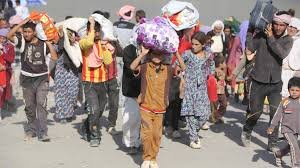
20 March 2026, ‘French IS member convicted of genocide for atrocities against Yazidis’
Read more here.

16 March 2026, ‘France begins landmark trial over Islamic State genocide of Yazidis’
Read more here.
March 2026, Litigation Tracker: Lincoln Case
Read more here.
16 March 2026, ‘Former Syrian Assad Prison Official Convicted of Torture and Immigration Fraud’
Read more here.
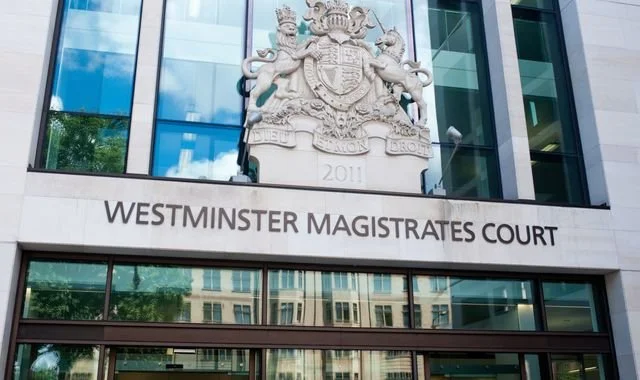
10 March 2026, ‘War crimes charge doesn't change UK’s safe haven status’
Read more here.


7 April 2026, ‘Ben Roberts-Smith arrested: former Australian soldier charged with five war crime murders in Afghanistan’
Read more here.
25 March 2026, ‘Syria fighter Hasna A. sentenced to 9 years in prison on appeal’
Read more here.

13 April 2026, ‘Lafarge ex-CEO sentenced to six years in prison for funding jihadists in Syria’
Read more here.
